


The term “high purity” gets used frequently in process design — sometimes as a buzzword, sometimes as a specification. But for engineers working in pharmaceutical piping design, biotech, and life sciences, “high purity” has a very precise meaning. True high-purity systems revolve around ASME BPE compliance and the assurance that every component, weld, and surface supports cleanability, validation, and traceability. In rapidly growing markets like Raleigh, North Carolina, and the broader RTP region, these expectations are higher than ever.
So what qualifies a component as high purity equipment and why does it matter so much?
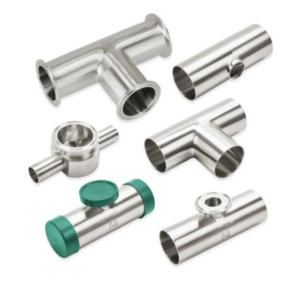
The ASME BPE (Bioprocessing Equipment) standard is the industry’s benchmark for controlling contamination risk in high-purity processes. Any piece of high purity equipment used in systems that handle products consumed, injected, or applied to the skin must meet ASME BPE criteria for materials, fabrication methods, surface finishes, and documentation.
Compared to traditional sanitary components, ASME BPE-compliant materials follow strict requirements for:
• Surface roughness – internal smoothness measured in Ra micro-inches
• Cleanability – system designs that are drainable and free of crevices
• Documentation – complete MTRs and heat-number traceability
• Weldability – materials and finishes that support repeatable, validated welds
If a component fails to meet these ASME BPE requirements, it may be sanitary — but it is not true high purity equipment
Surface finish is one of the most important — and most misunderstood — aspects of pharmaceutical piping design. Smoothness directly affects contamination risk, system longevity, and validation outcomes.
• BPE surface finish SF1 (mechanical polish, ~20 µin Ra) — suitable for less-critical utilities or CIP return
• BPE surface finish SF4 (electropolish, ~15 µin Ra) — chemically treated for maximum smoothness and used for WFI and product contact
Choosing between BPE surface finish SF1 SF4 early in the design phase helps prevent rework, cost increases, and validation challenges.
In high-purity design, documentation is not optional. Every piece of tubing, every valve, and every weld must be supported by MTRs that tie back to heat numbers and mill sources. This level of traceability is required under the ASME BPE standard and is fundamental to compliant pharmaceutical piping design.
Working with suppliers who understand BPE documentation requirements can save engineers valuable time during turnover by providing clean, validated, organized paperwork from project kickoff through system startup.
It’s easy to assume stainless steel is stainless steel — but in high-purity applications, the difference lies in the details. Manufacturing methods, surface quality, weld prep, and traceability determine whether a component can perform in a validated environment. Even if two components look identical, only the ASME BPE-compliant option is appropriate for true high-purity service.
Specifying high purity equipment built to ASME BPE standards isn’t just about checking a compliance box. It’s about protecting product integrity, minimizing contamination risk, and ensuring long-term reliability.
For engineers in Raleigh, North Carolina, and the larger RTP biotech and pharmaceutical corridor, partnering with a supplier who understands ASME BPE standards is essential. Rodem High Purity provides tubing, valves, fittings, and components that meet ASME BPE requirements, backed by complete documentation and local technical support.
Our Raleigh team simplifies specification, helps navigate BPE surface finish SF1 SF4 decisions, and supports compliant pharmaceutical piping design from concept through turnover.
Connect with our local RTP engineering team to learn more about high-purity material selection and ASME BPE-compliant system design.
